🎹 Ultimate Pianist

🏆 First ever · Sep 12 & 13

The first Ultimate Pianist Tournament

Two competitions, a $100 prize pool, and a real piano duel in 1830s Vienna. Open to every pianist in the online community, and to everyone who wants to watch.

Pick your seat

A name and an email is all it takes. You'll get the schedule, the pieces and a say in the repertoire.

Two competitions

Getting better at the piano is two things, technique and artistry, and you can't have one without the other. So there are two brackets, and each one judges one thing.

🎯 Saturday, September 12

Accuracy Competition

Für Elise, the Moonlight Sonata, Chopin's E-minor Prelude, Mozart's C-major Sonata and the Turkish March, one per round. Two players at once in duel mode, the game scoring every note against the metronome, the spectators watching in real time to see who makes fewer mistakes.

Judged by: the game's scoring. Right notes, on the beat.

🎭 Sunday, September 13

Artistry Competition

Popular pieces chosen by the community, played in free-form mode with the sheet music and the falling keys but no metronome. A coin flip decides who goes first, each pianist performs, and the audience votes on who was more expressive and deserves the next round.

Judged by: the audience. Beauty, phrasing, feeling.

What it looks like

Ten seconds of each. The game reads your keyboard and judges every note against the score; in a duel it does that for both players at once.

Single playerMoonlight Sonata, 3rd movement. Sheet music on top, the falling keys below, every note judged as you play it.
Duel modeTwo pianists, one piece, scored at the same time. This is what the spectators watch on Saturday: who keeps the combo, who breaks it.

The prizes

Each competition's winner takes home

  • 💵$50real money
  • 🪙10,000in-game gold
  • 🎹A legendary pianofor your career in the game

Two winners, $100 in cash, and two legendary pianos leave Vienna that weekend.

How the brackets run

🎯 Accuracy: one piece per round

Head to head in duel mode. The game scores both players at the same time and the spectators watch it happen.

  1. 1Round of 32Für EliseL. van Beethoven
  2. 2Round of 16Moonlight Sonata, 1st movementL. van Beethoven
  3. 3Quarter-finalsPrelude in E minor, Op. 28 No. 4F. Chopin
  4. 4Semi-finalsSonata in C major, K. 545, 1st movementW. A. Mozart
  5. 5FinalTurkish March (Rondo alla Turca)W. A. Mozart

🎭 Artistry: the audience decides

Both pianists enter a room with the sheet music and the falling keys, in free-form mode with no metronome.

  1. 1Coin flipDecides who performs first.
  2. 2First performanceThe spectators listen. No score on screen, just the playing.
  3. 3Second performanceSame piece, the other pianist.
  4. 4The voteThe audience picks who was more expressive. The winner moves on.
  5. 5Five roundsOne piece per round, all five chosen by the community poll below.

You choose Sunday's pieces

The artistry repertoire isn't decided yet, on purpose. Everyone who signs up can suggest pieces and vote for as many as they like, live, until Tuesday, September 8. The top five become the bracket.

The artistry repertoire, as voted

Voting closes Tuesday, September 8

The community picks the pieces. The five with the most votes when the poll closes are the artistry bracket, one per round.

Nothing on the poll yet. Be the first to suggest one.

Sign up (as a player or a spectator) to vote and to suggest pieces.

Sign up to vote

Why a piano duel

In 1837, Liszt and Thalberg had a legendary piano duel that drew all of Paris together to hear two great masters go head to head. Back then piano duels were common in local pubs and saloons: pianists would improvise, play variations and show off their skill and artistry in front of a boisterous audience. Two hundred years later they have all but disappeared, replaced by a “Dueling Pianos” gimmick where the pianists are karaoke leaders getting cruise-ship vacationers to sing Wonderwall.

I grew up on online games like World of Warcraft and loved the social side of them. Hundreds of hours later, I realised I hadn't built a single real-life skill from mashing a keyboard at a monster. And my favourite thing in the world, playing the piano, had no online world of its own: nowhere to duel other pianists, swap tips, and get better together.

Ultimate Pianist is about making you a better pianist, and as a teacher I've learned that comes down to two things. Technique and artistry. A pianist with only technique plays like a robot; a pianist with only artistry can't express what they feel clearly enough to touch anyone. Accuracy is easy to judge, so the game does it. Artistry needs real people listening, so the audience does that. Scoring both in one run would just be confusing, and splitting them is more fun: the accuracy players can drill the classics slowly and precisely, and the artistry players can spend the week on making a melody sing.

These two days are our chance, as a piano community, to see if we can build a world where pianists compete, get better together, and find out who has the steadier hands and who has the bigger heart. I hope you're as excited as I am.

Lionel
Where it happens

The game is set in 1830s Vienna, where the ghosts of Mozart and Beethoven wander the streets, the local saloon hosts real piano duels, and the concert halls are the ones the immortals once played in.

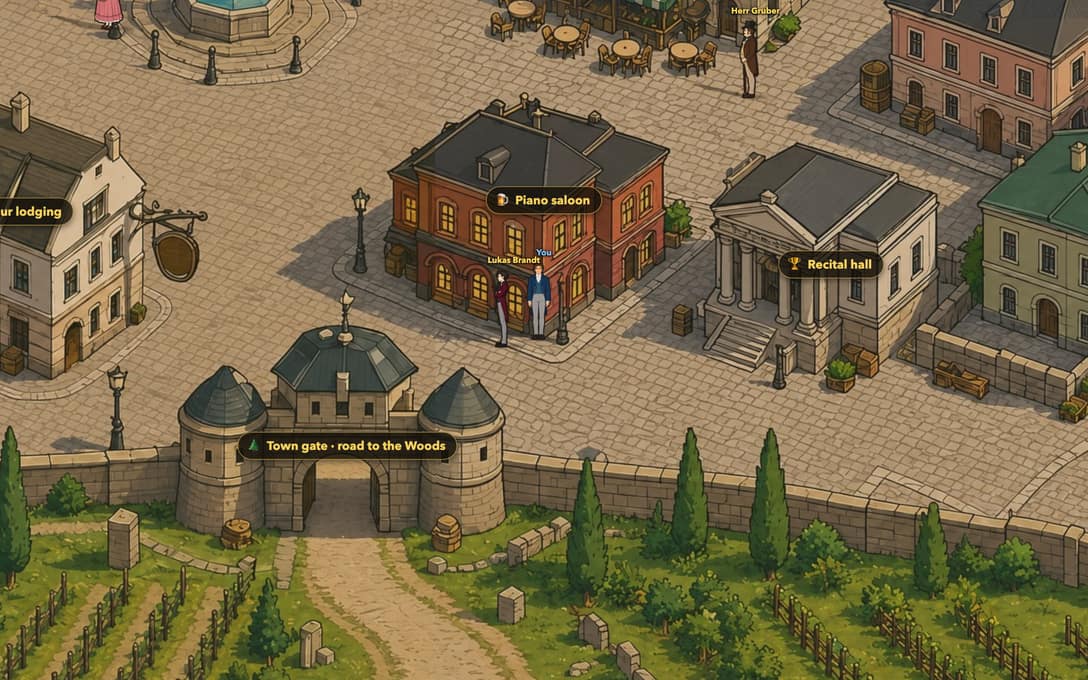
The Piano saloon and the Recital hall in the game's 1830s Vienna, where the duels are held
The Piano saloon and the Recital hall, where the duels are held.
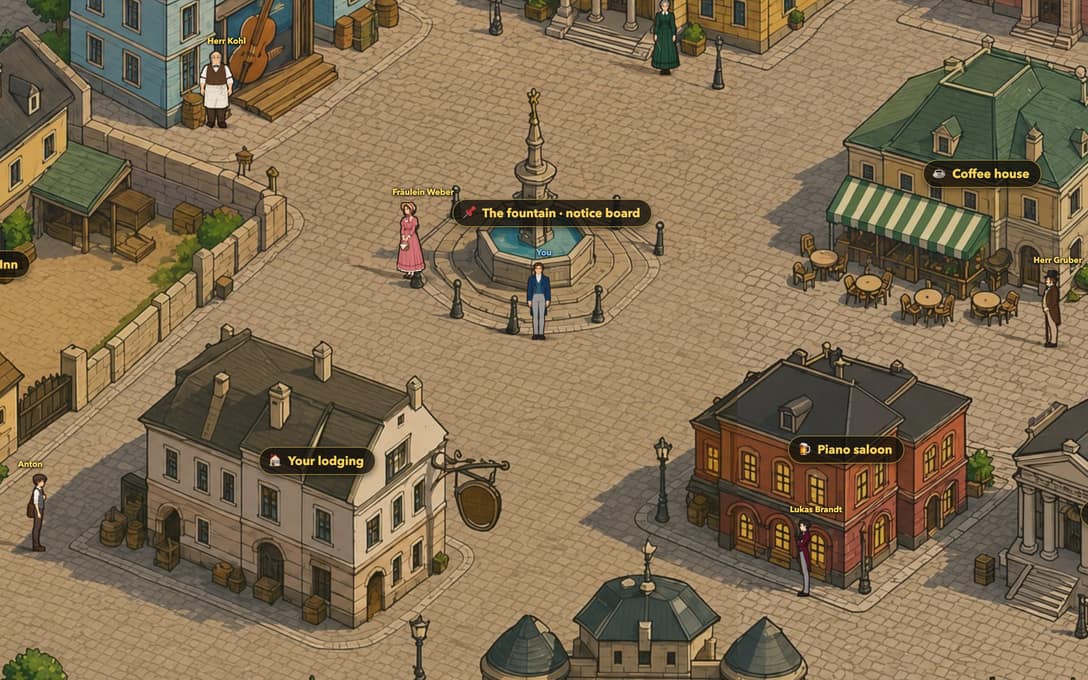
The town square in Vienna: the fountain notice board, the coffee house and the piano saloon
The town square. The notice board is where the tournament is posted.
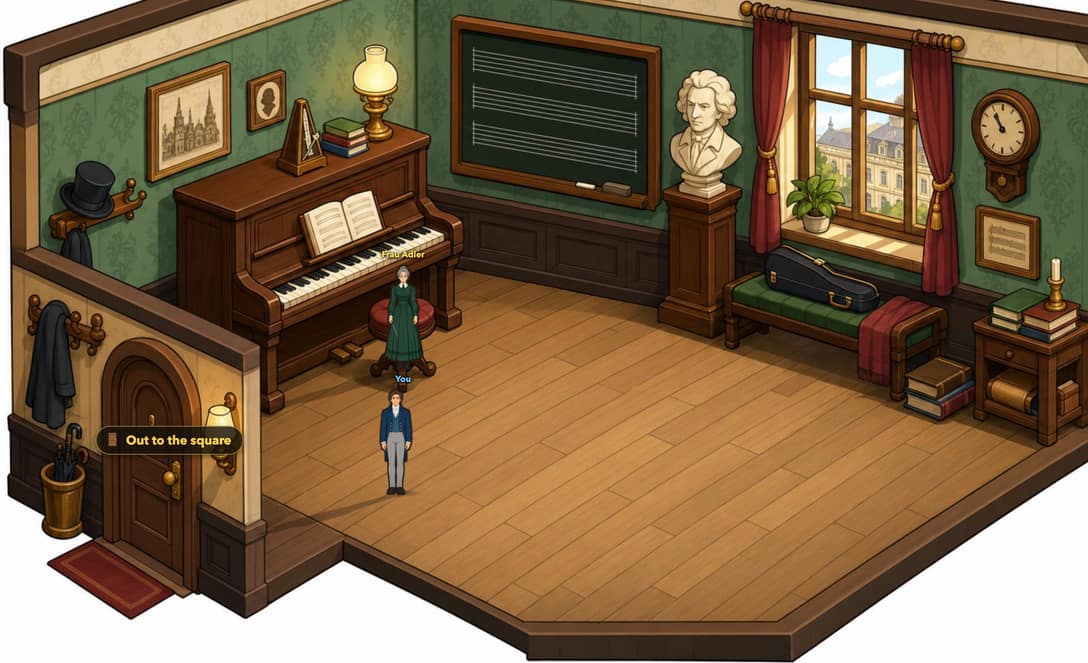
Frau Adler's practice room in the game: an upright piano, a metronome, a bust of Beethoven and a chalkboard staff
Frau Adler's practice room. Where the week before goes.
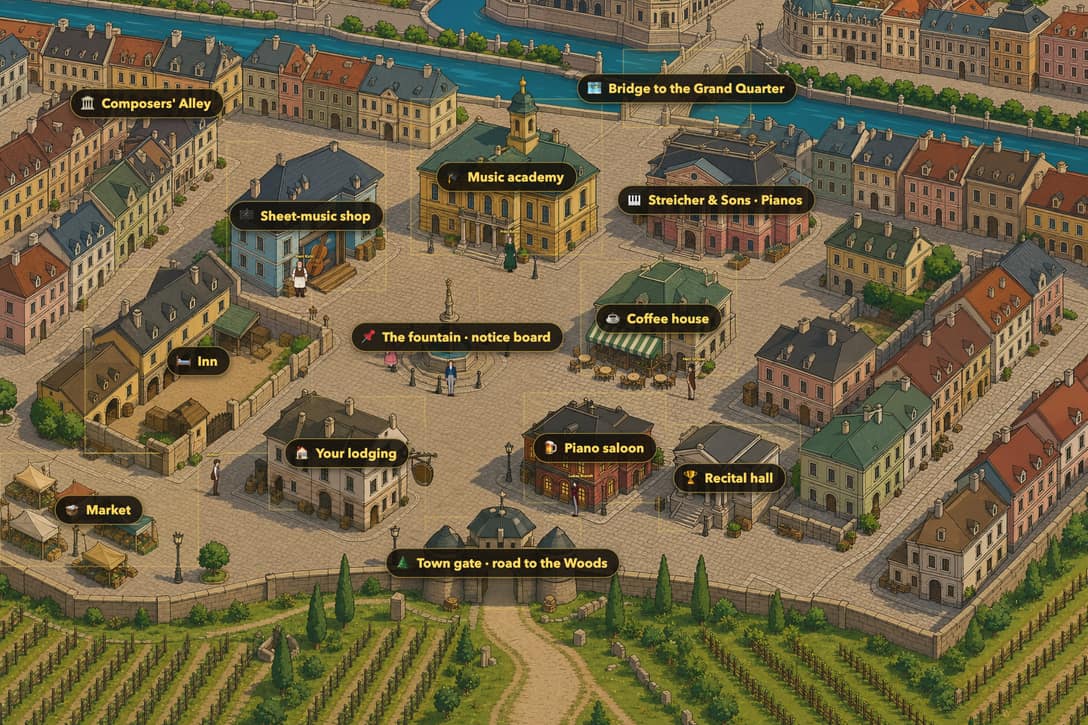
The map of Vienna in Ultimate Pianist: the music academy, the sheet-music shop, the piano saloon and the recital hall around the square
Vienna, from the music academy to the town gate.

Questions

What do I need to play?
A piano or MIDI keyboard plugged into your computer, and a free Ultimate Pianist account. The game runs in the browser.
Can I enter both competitions?
Yes. They're on different days. Sign up for one, then come back and sign up for the other with the same email.
Is it free?
Completely. Signing up, playing, watching and voting all cost nothing.
What if I'm not good enough?
The accuracy bracket starts with Für Elise, and the artistry bracket plays whatever the community votes for. If you can get through a piece, you can enter. Half the point is finding out.
What time does it start?
The match times go out by email to everyone who signs up, once the bracket is full. Both days run in US Pacific time.
I just want to watch.
Sign up as a spectator. You'll see every duel live from inside the game, and on Sunday your vote decides who moves on.

See you in the saloon

September 12 & 13, 2026. Thirty-two seats a bracket, and the first ones go to whoever signs up first.